Protecting Our Coast: How SCDES Is Strengthening the Fight Against Abandoned and Derelict Vessels
Wednesday, Apr 15, 2026
Photo Credit: MyCoast SC
South Carolina’s coastal environments are treasured natural resources—supporting wildlife, recreation, tourism and local economies. Protecting these resources requires coordination, collaboration and innovation. That’s why the South Carolina Department of Environmental Services (SCDES), through its Bureau of Coastal Management (BCM), is leading an initiative to strengthen how abandoned and derelict vessels (ADVs) are reported, documented and addressed across the state’s coastal counties.
Why Abandoned and Derelict Vessels Matter
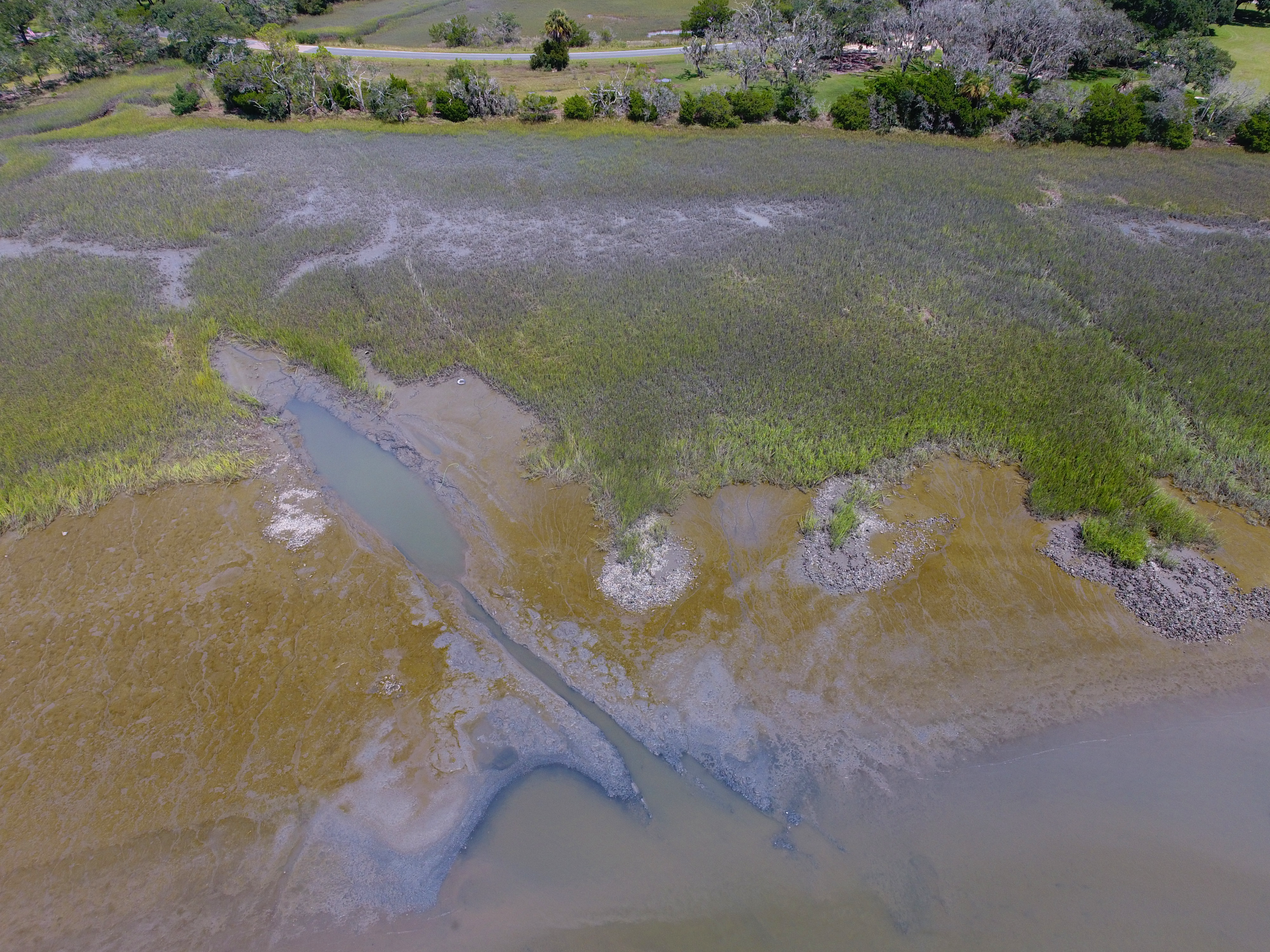
Photo Credit: SCDES BCM. A drone photo of the damage to the marsh left by the Navy torpedo retriever HAZAR.
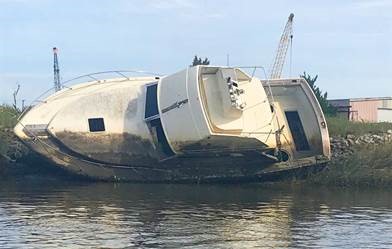
Abandoned and derelict vessels can pose serious risks to navigation, public safety, water quality and sensitive coastal habitats. From fuel leaks to physical hazards in waterways, these vessels often require coordinated efforts from multiple agencies before they can be investigated or removed.
Building a Stronger Reporting and Collaboration System
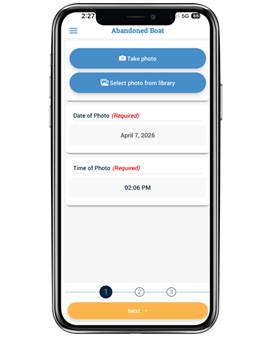
A view of the MyCoast SC ADV Reporting tool on the MyCoast app.
BCM recently enhanced the public boat reporting tool on the MyCoast South Carolina platform. Initially developed in 2015 to allow the public to easily report potentially abandoned or derelict vessels, the reporting form has been expanded. Users can now share additional information including vessel type and disposition and identify the presence of hazardous materials. As part of this enhancement, public boat reports submitted through MyCoast now route directly to appropriate South Carolina Department of Natural Resources (SCDNR) Law Enforcement Division personnel and SCDES coastal compliance project managers for review.
BCM has also developed a dedicated coastal ADV Database within MyCoast South Carolina to support collaboration among state, county, and municipal partners working in South Carolina’s eight coastal counties. This database allows agencies to efficiently share information, track investigations and coordinate next steps related to ADV cases.
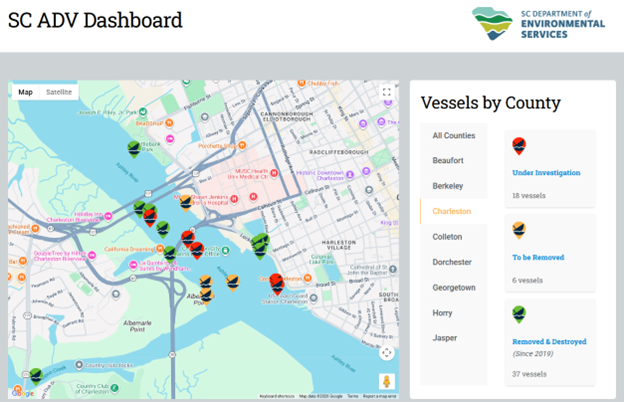
To further enhance transparency and public awareness, BCM launched a public ADV Dashboard in March. This interactive tool provides a clear picture of efforts to address ADVs along the coast by displaying:
Vessels currently under investigation
Vessels that are eligible for removal
Vessels that have been removed in coastal counties since 2019
Together, the new and enhanced MyCoast ADV tools are designed to improve the public reporting process, streamline interagency communication and highlight the state’s efforts to protect South Carolina’s coastal waterways.
A Decade of Progress
BCM’s work on ADV reporting has steadily evolved over the past decade:
2015: BCM launched a public reporting tool within the MyCoast SC platform, allowing residents and waterway users to report potentially abandoned or derelict vessels through a mobile app or website.
2021: BCM received federal funding to enhance the MyCoast ADV system, expanding its capabilities and improving data management.
2025: The South Carolina General Assembly passed state legislation addressing ADVs, reinforcing the importance of consistent documentation and data sharing among agencies. SCDES is identified as the agency to lead the database development effort.
2026: BCM launches the new and enhanced MyCoast ADV tools, including the enhanced public reporting tool, the public ADV Dashboard and the interagency ADV Database.
Supporting Partnerships and Informed Decision-Making
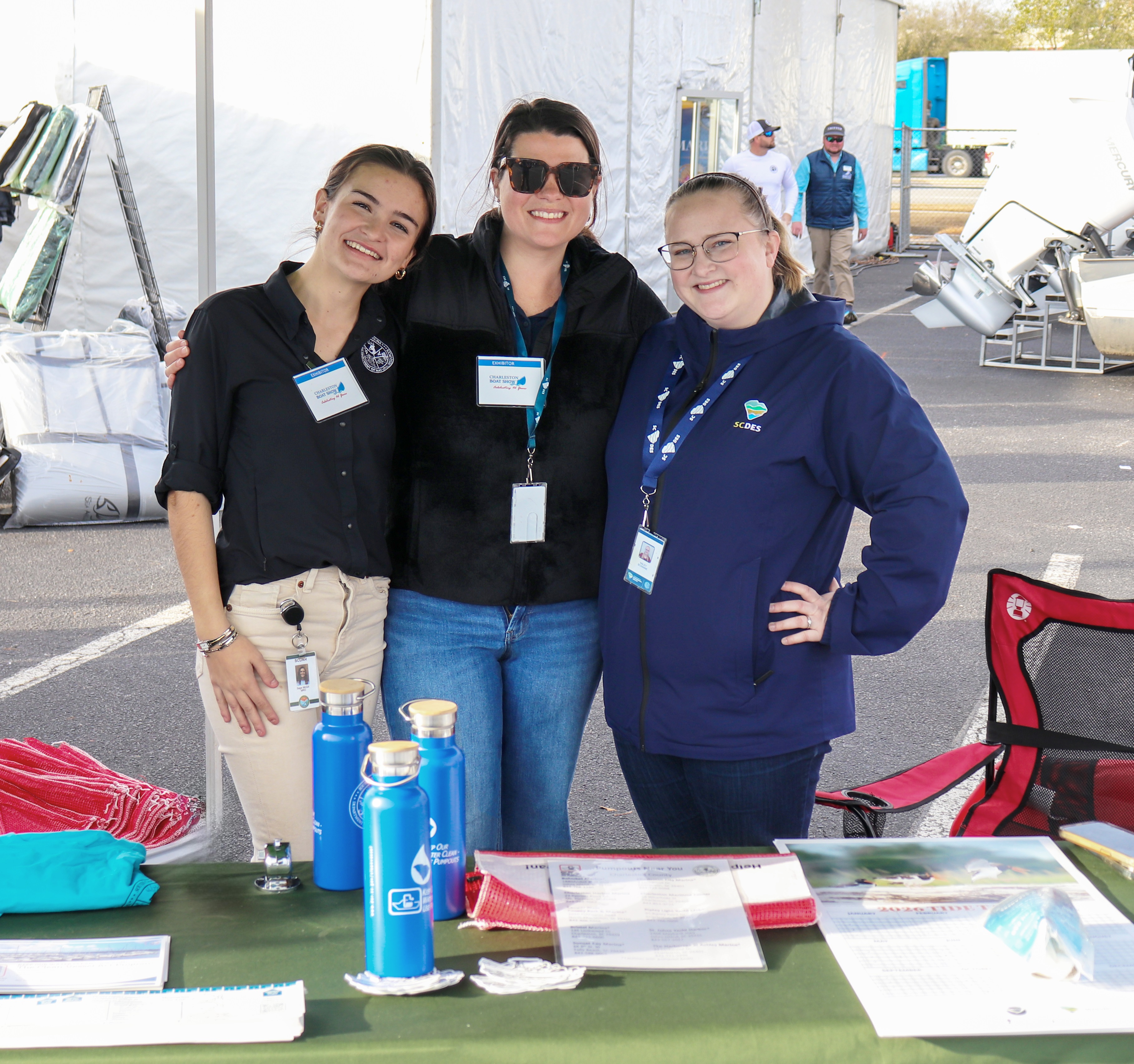
Photo credit: SCDES. BCM staff attending the Charleston Boat Show with SCDNR.
While much of the recent attention around ADVs has focused on removal efforts led by various agencies, BCM has focused on modernizing the systems necessary for managing and organizing the information that makes those efforts possible. The ADV Database allows for more collaborative vessel tracking and documentation and enhanced data visualization.
The ADV Dashboard also serves as a valuable resource for the public, journalists, policymakers and members of the General Assembly by providing accessible, up-to-date information on ADV activity and progress along the coast.
What This Means for the Public
A view of the SC ADV Dashboard.
For coastal residents and waterway users, the enhanced ADV tools mean:
Easier and more effective reporting of abandoned or derelict vessels
Greater transparency into how reported vessels are being addressed
A clearer understanding of the collaborative efforts protecting South Carolina’s coast
Looking Ahead
The expansion of SCDES BCM’s MyCoast ADV tools represents an important step forward in how South Carolina manages abandoned and derelict vessels along its coastline. By strengthening data systems, improving public access to information and supporting interagency collaboration, SCDES BCM is helping ensure cleaner, safer and more resilient coastal waterways for everyone.