
Per and polyfluoroalkyl substances (PFAS) are a group of thousands of man-made chemicals that are sometimes referred to as ‘forever chemicals’ because they don’t easily break down in the environment. PFAS have been widely used in consumer products and industrial applications since the 1950s because of their useful physical and chemical properties, especially stain, heat, oil, grease and water resistance. Unfortunately, some of these chemicals have since been linked to adverse health effects.
Some key things to know include:
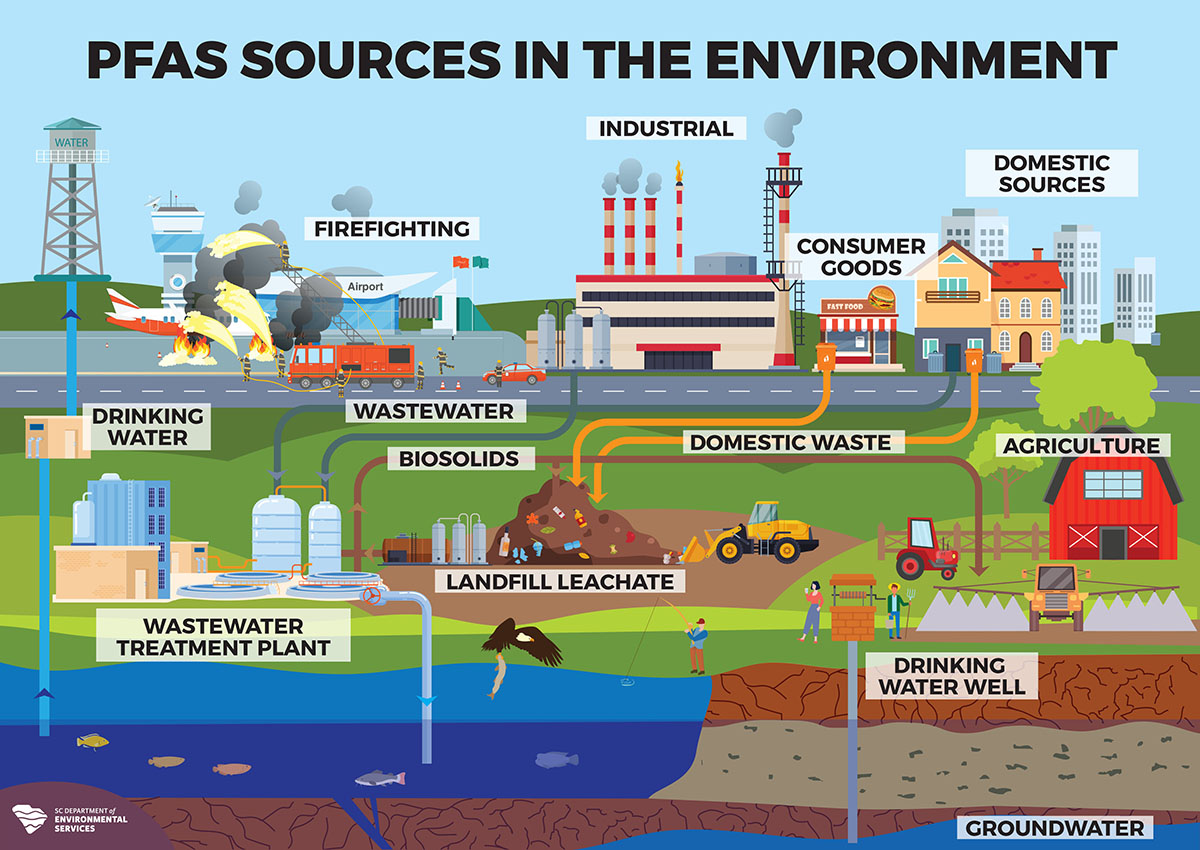
- There are many sources of PFAS. Because they are resistant to break down, they tend to cycle through the environment [See graphic below.]
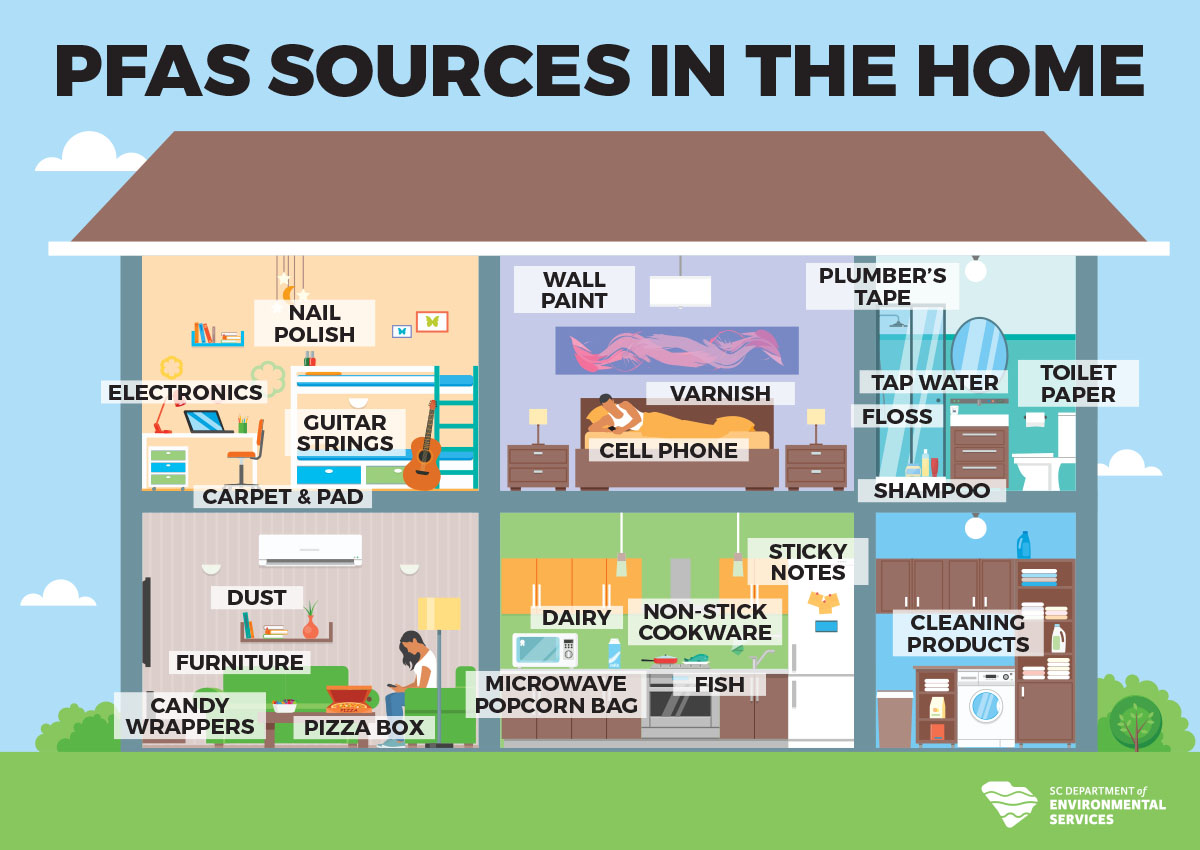
- Consumer products and food packaging account for a large percentage of our exposure. [See graphic below.]
- It is estimated by the USEPA that about 20% of our exposure to PFAS comes from drinking water.
- The USEPA has set drinking water standards for 5 PFAS.
- PFAS can accumulate in people, wildlife and fish.