

Back to All Blogs
 Back to All Blogs
SCDES Highlights South Carolina’s Clean Air During National Air Quality Awareness Week
Tuesday, May 5, 2026
May 4-8 marks National Air Quality Awareness Week; a nationwide initiative focused on the importance of clean air and the everyday factors that influence air quality. In South Carolina, the S.C. Department of Environmental Services (SCDES) Air Program works year-round to protect and improve the air residents breathe.
The good news: South Carolina currently meets all National Ambient Air Quality Standards (NAAQS) for all six principal pollutants—particulate matter, ozone, carbon monoxide, sulfur dioxide, nitrogen dioxide, and lead. These federal standards, established by the U.S. Environmental Protection Agency, serve as the national benchmark for protecting public health and the environment.
“Not only does South Carolina have clean air, but our state’s air quality has been improving over the years,” said Rhonda Thompson, Chief of SCDES’s Bureau of Air Quality. “This is in large part due to the support we receive from local air quality coalitions, industries, schools, local governments and other stakeholders for continually wanting to improve South Carolina's clean air.”
Behind the scenes, SCDES’s Air Program—which includes the Bureau of Air Quality, the air laboratory within the Bureau of Regional and Laboratory Services, and regional offices—works to maintain and strengthen that progress every day. Their work includes developing air quality regulations and strategies, tracking emissions data, conducting air dispersion modeling and ozone forecasting and administering programs that reduce air toxics and prevent accidental releases.
The program also reviews and issues air quality permits for industrial, commercial and institutional facilities, conducts inspections, responds to public concerns and enforces state and federal air quality laws, including open burning and asbestos regulations.
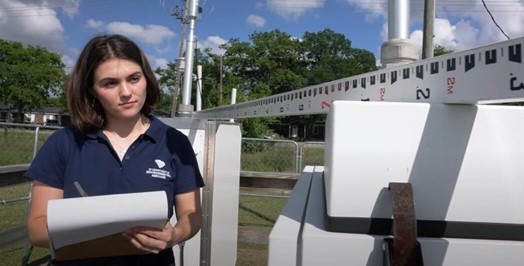
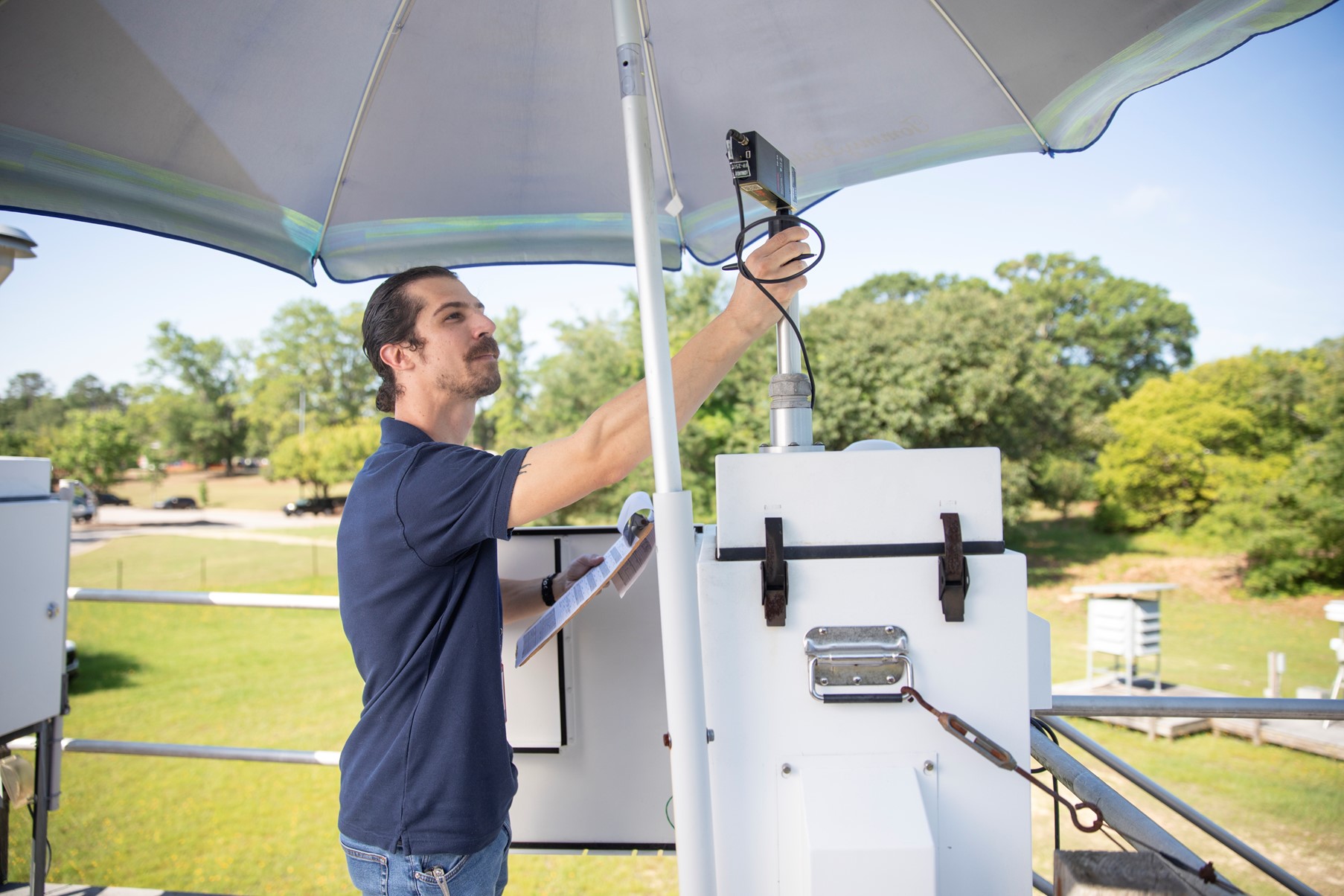
Across the state, SCDES operates 23 air monitoring stations that continuously measure outdoor air quality. From March 31 through Sept. 30 each year, the agency also provides daily ozone forecasts to help the public make informed decisions about outdoor activities. Elevated ozone levels can affect sensitive groups, including children, older adults and individuals with asthma or other respiratory conditions.
SCDES offers an updated air quality forecast tool that provides easy access to daily air quality conditions and ozone forecasts across South Carolina.
“Another important focus of National Air Quality Awareness Week is to remind the public that there are several actions we all can incorporate into our daily routines to help protect our air,” Thompson added.
Simple everyday choices can make a measurable difference, including:
- Using electric-powered lawn equipment instead of gas-powered alternatives
- Keeping vehicles properly maintained to reduce emissions and improve fuel efficiency
- Combining trips and errands or shopping locally to reduce miles driven
- Avoiding unnecessary idling, such as waiting in drive-through lines
SCDES also provides public access to air quality data and forecasts through AirNow.gov, where information collected from monitoring stations is shared with the U.S. Environmental Protection Agency. In addition, the agency submits an annual emissions inventory to support nationwide air quality planning and analysis.
South Carolinians can explore real-time air quality information, ozone forecasts, and additional resources on our Air Quality Forecast webpage. Residents can also sign up for air quality alerts to stay informed about local conditions.
As National Air Quality Awareness Week highlights the importance of clean air across the country, South Carolina continues to demonstrate that strong partnerships, steady monitoring and everyday actions all play a role in keeping the state’s air clean for generations to come.